Back
Waste Heat: How Much Is Wasted, How Much Can Be Recovered
Written by - Vinod M I From Abhiyantha June 02, 2025 5 Minutes
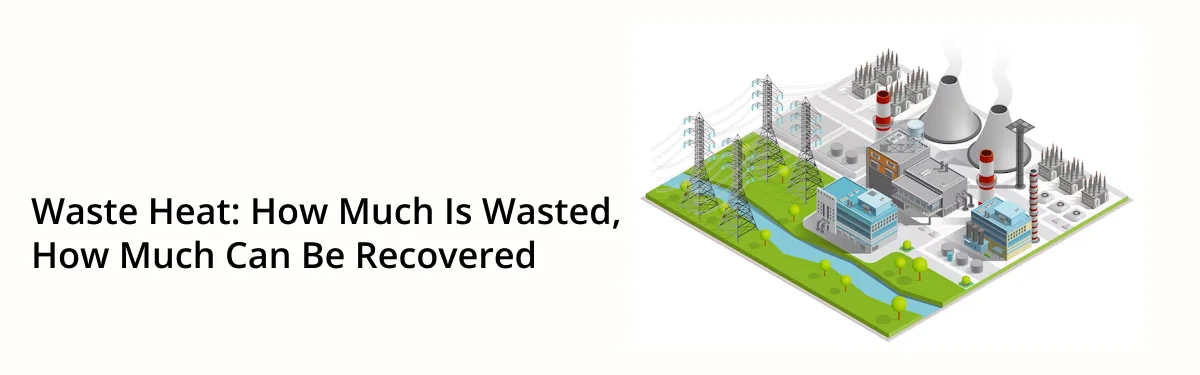
Industries across the world consume vast amounts of energy every day to operate machinery, process raw materials, and generate power. Surprisingly, a significant portion of this energy—often between 20% and 50%—is lost as waste heat. This waste heat can come from various sources, such as the hot exhaust from a cement kiln, the heat emitted by a chemical reactor, or the warm air expelled by HVAC systems. The good news is that, with the right technology, much of this lost heat can be captured and reused, resulting in substantial savings in energy, operational costs, and greenhouse gas emissions. But how much of this heat can actually be recovered? And how exactly is it done? To answer these questions, let’s explore the fascinating world of Waste Heat Recovery (WHR).
A significant portion of energy is wasted as heat across various industrial and transportation sectors. Waste heat, which escapes unused in the form of hot gases, liquids, or heated surfaces, represents a major efficiency loss. Power plants typically waste about 50–60% of the energy they produce as unused heat, while Cement manufacturing facilities are also inefficient which is losing around 35–45% of their input energy. The iron and steel industry also faces similar challenges with 25–40% of energy being lost during production processes, and in other hand the transportation sector, automobiles are particularly inefficient, wasting up to 70% of the fuel's energy as heat instead of converting it into useful motion. Addressing these losses through waste heat recovery can lead to major improvements in energy efficiency and sustainability. On a global scale, it's estimated that more than half of all industrial energy ends up as waste heat.
Not all industrial waste heat can be recovered economically, especially when it comes from low-temperature or widely dispersed sources, but around 20–30% of total industrial waste heat can still be effectively recovered with the right systems in place as the recovery potential mainly depends on the temperature of the heat source, with high-temperature sources such as furnace flue gases and kilns (above 500°C) offering the highest recoverability rates of over 50%, medium-temperature sources like boiler blowdown and industrial dryers (250–500°C) allowing for moderate recovery of about 30–50%, and low-temperature sources including cooling water and HVAC exhausts (below 250°C) providing limited recovery potential typically between 10–30%.
Waste heat is recovered using various technologies, chosen based on factors like temperature, volume, and the characteristics of the heat source. Heat exchangers are widely used in industries such as refineries, food processing, and glass manufacturing to transfer heat between fluids without mixing them. Heat Recovery Steam Generators (HRSGs) are common in power and cement plants, capturing turbine exhaust to produce steam. Organic Rankine Cycle (ORC) systems use organic fluids to generate electricity from low to medium- temperature heat, often applied in biomass and waste treatment facilities. Heat pumps are effective for upgrading low-grade heat for reuse in heating, particularly in buildings and the food processing industry. Thermoelectric generators (TEGs) directly convert heat into electricity and are suited for automotive and remote energy applications. Additionally, thermal energy storage systems enable recovered heat to be stored for later use, benefiting batch-processing industries and building energy management.
Waste heat can be recovered across a wide range of sectors where high-temperature processes are common. In the cement industry, heat is typically recovered from kilns and clinker coolers. Steel production offers opportunities to capture heat from slag and furnaces. Power plants often recover heat from turbine exhaust, while glass manufacturing reclaims heat from high-temperature furnaces. In the chemical industry, waste heat arises from reactors and distillation columns. The automotive sector recovers heat from engines and paint lines, improving overall energy efficiency. Buildings can harness waste heat from HVAC and refrigeration systems, and data centers utilize heat from server cooling systems, turning excess thermal energy into a resource rather than a loss.
Waste heat recovery is essential because it improves energy efficiency, reduces operational costs, and minimizes environmental impact. In both industrial and commercial sectors, a significant portion of energy input is lost as heat; by recovering this waste heat, it can be reused for heating, power generation, or other applications, reducing the need for additional fuel. This leads to lower energy bills, decreased greenhouse gas emissions, and reduced reliance on fossil fuels. Waste heat recovery supports sustainability goals, enhances system performance, and helps industries comply with increasingly strict environmental regulations. It also plays a critical role in tackling global energy challenges, improving industrial competitiveness, and contributing to climate change mitigation, while promoting technological innovation and the transition to cleaner, more sustainable practices. In an era of rising energy demand and environmental concerns, recovering and reusing waste heat transforms a lost resource into a valuable opportunity for cleaner and more efficient operations. Waste heat is one of the largest untapped resources in modern industry, offering vast potential for improving energy efficiency and sustainability. By understanding how much heat is wasted, how much can be recovered, and the technologies available to do so effectively, we can make significant strides toward a more sustainable and cost-efficient energy future. For those in manufacturing, energy production, or building operations, now is the time to explore the benefits of waste heat recovery—not only to reduce costs and emissions but also to stay competitive and environmentally responsible in a rapidly evolving energy landscape.
Share This Blogs
Featured Blogs

The Evolved Mechanical Engineer

Waste Heat Recovery from Industries

From thoughts to table
